Designing Slides for a presentation

People make presentations every day. And, people use PowerPoint, Keynote, Google slides, or other presentation programs. But do they use these programs correctly?

No! Many people read from their text-cluttered slides, also known as death from PowerPoint. If you are just going to read from your slides, send your audience your presentation to read. Then, have a meeting to discuss what your audience liked and disliked about the presentation.

Professional trainers, corporate instructors, and yes, even some teachers read from their slides. Teaching is not reading!

When I give my students an assignment to make a presentation, I tell them that if they read from their slides, they fail. If your slides are cluttered with text, you will get a lower grade. I also tell them that they don’t need to use slides. A presentation is a way to communicate an idea, goal, plan, etc. Use whatever you feel best expresses your message.

**Write first

Write first, design later. You need to define your content first. What is your presentation about? What do you want to say? Who is your audience? How long do you have to talk?

Don’t worry about how many slides you need to create. You don’t know how many slides you will need until you write your presentation. Yes, sometimes your boss will tell you how many slides you need to create. However, write first, then create the slides. Write down all your ideas and use the best in your presentation. You can always delete slides if you have too much content or write more if you need more slides. Remember, you and your ideas are the presentation. The slides are your props. Your audience is there for you, or sometimes they have no choice, it’s a requirement. Either way, give them the best presentation possible.

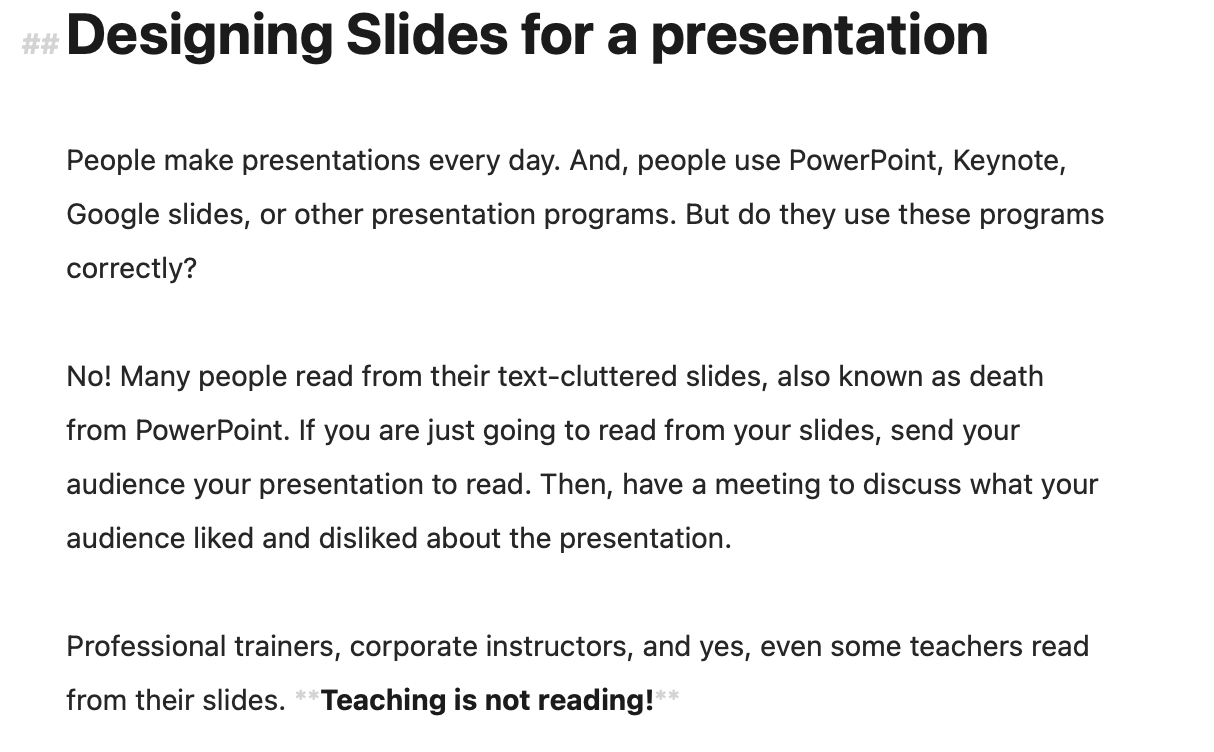
Here is an example of my notes.
**Choosing a slide theme

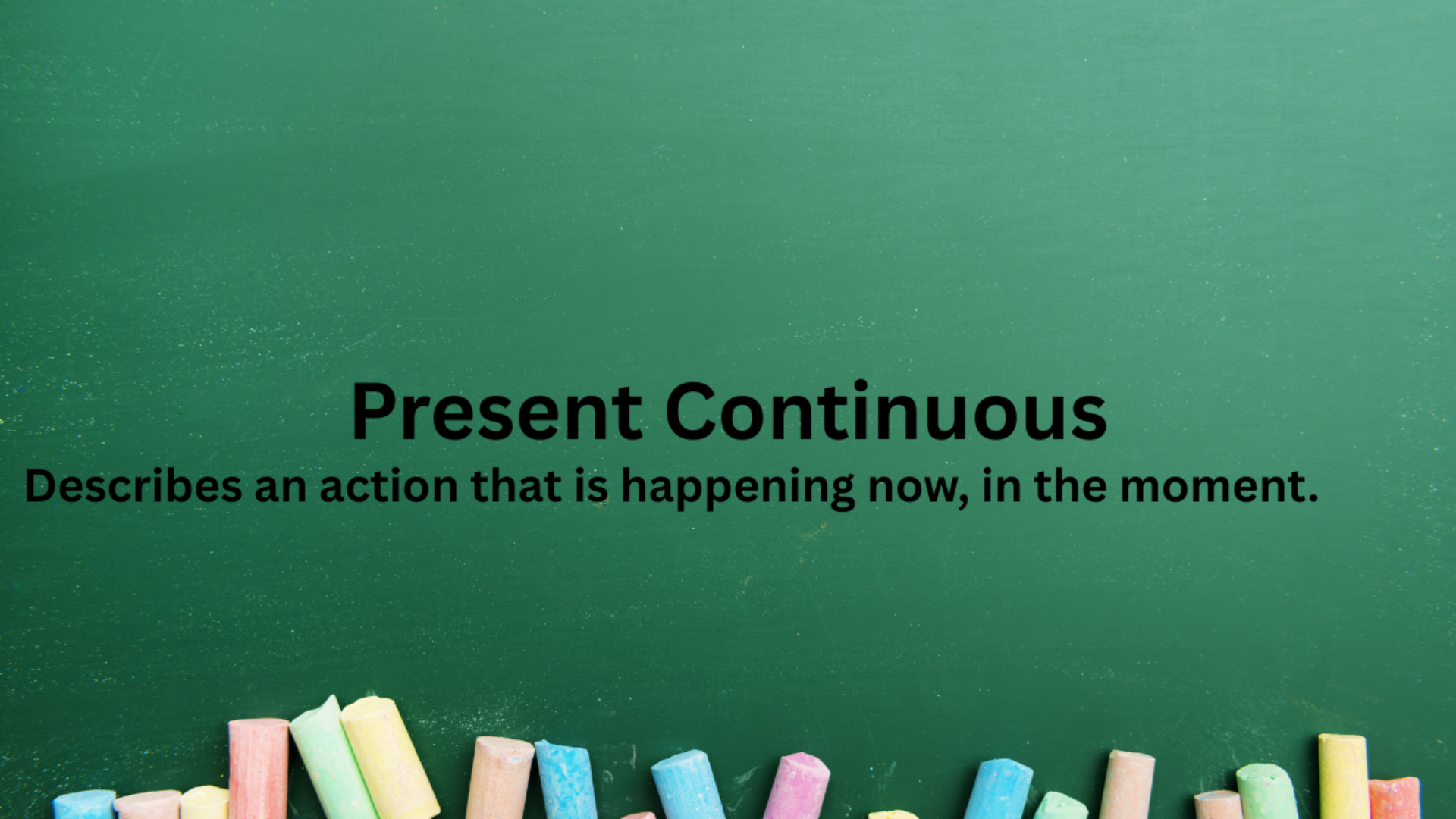
When I complete my writing, I then choose a theme. If your presentation is for work, use the pre-defined theme they give you. I create online classes and for one course, I used a classroom theme.

Here are some examples. This slide introduces a concept.
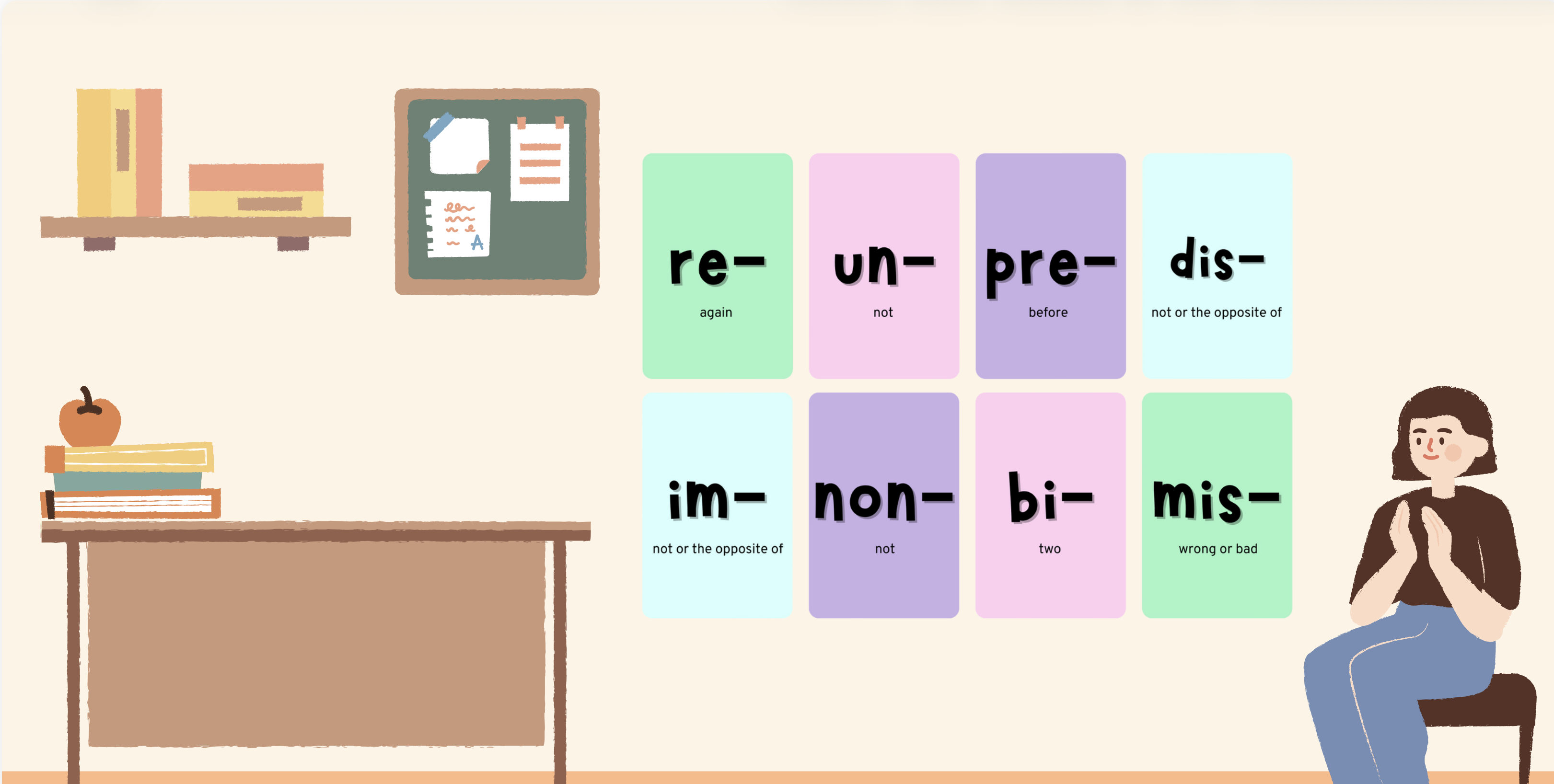
The next slide displays as I am giving examples of words with prefixes. I don’t read the prefixes on the slide and I do not have a slide for the words I am say. The audience can put the two together.
The next slide depicts a multiple-choice question. While the slide displays, I talk about how students can recognize a correct answer without fully comprehending the concept. I discuss that there are many ways to test students and written exams are just one way.

**But I’m not an artist

I’m not an artist or graphic designer. Canva is an excellent tool to design presentations. The examples in this presentation are from Canva. There are also stock photo sites.

**Your slides have words

It’s OK to have words in slides. Presentations are about communication. And, images and words are two ways to communicate. This next slide displays a way to use words and images in a fun way.
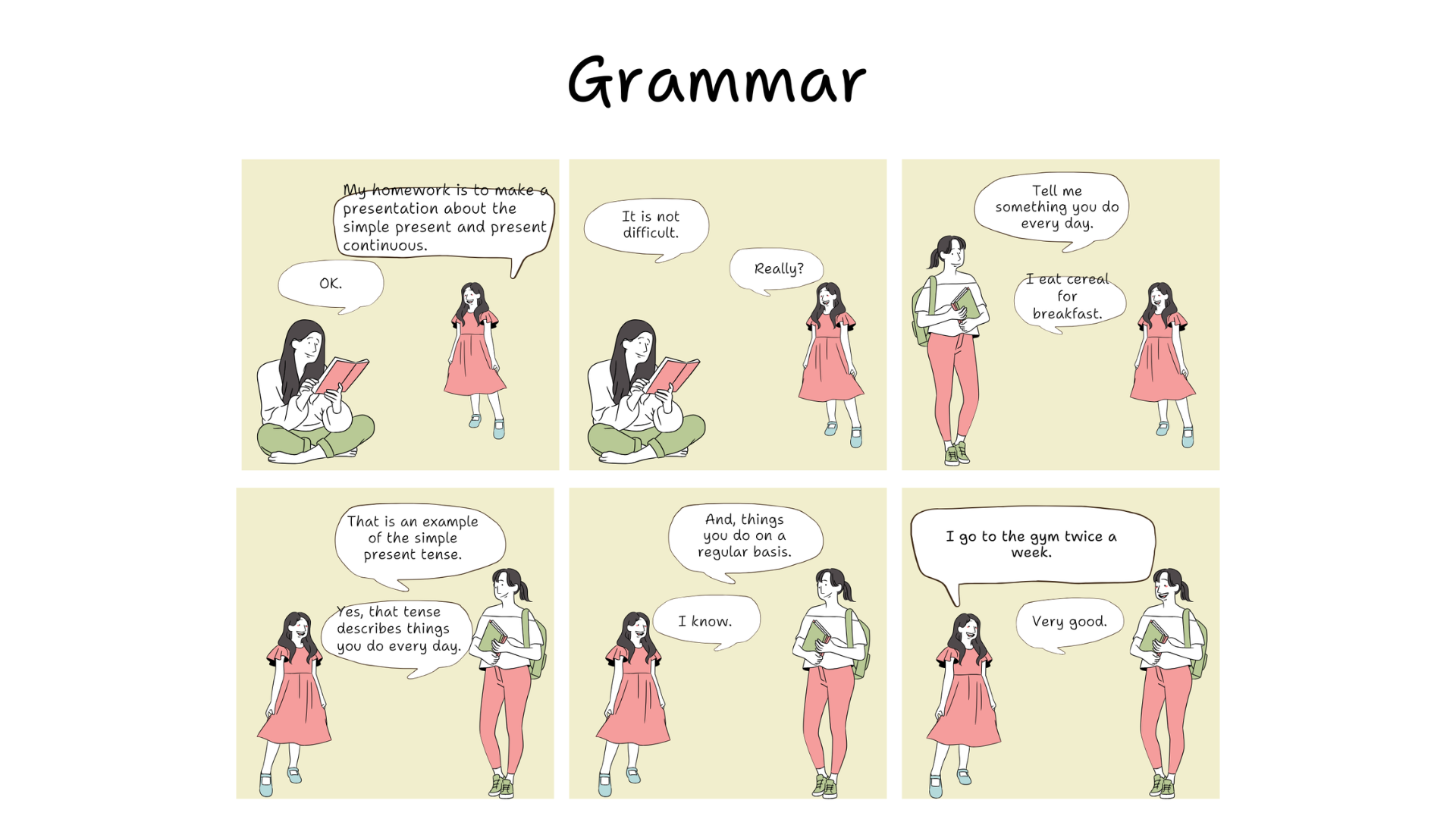
I refer to the slide but I don’t read it. I talk about eliciting grammar while the slide displays.

**Take Away

When you need to make a presentation:

  • Write first.
  • Don’t worry about the number of slides.
  • Your content will define the number of slides.
  • Choose a theme.
  • Use images to express your ideas.
  • Don’t read.
  • When you present, the spotlight is not just on your presentation. The spotlight is also on you.

Tests

When we talk about tests and teaching, people forget about what it was like when they were students. Education is vital and so are good teachers. Tests are also important both for the students and teachers.

People say that teachers should be solely evaluated based on how well they do. Teachers who have students that get As are better than students that get lower grades. There is some truth to that. Smart students get As.

I ask these people if they were straight A students. Most weren’t. I ask them about a class in which they didn’t get a good grade. They tell me that they had a bad teacher. So, I ask, what about the students that got an A in that class? Oh, they were the teacher’s pet.

**Really? Maybe they were good students and you weren’t. They seem to always be right, except on the test. It wasn’t their fault. **

Everyone is good with some subjects and everyone is bad at certain subjects.

I’m not saying that it’s never the teacher’s fault. There are good teachers and bad teachers. And, good teachers will have students that fail.

Teaching is not just talking. If that were the case, I’d be the teacher of the century.

I have a part-time job teaching adult immigrants English. Some like tests and some don’t. And interestingly, some that don’t like tests do better than those that like tests.

The type of test can determine how well a student does. For example, when I teach students the simple present and present continuous tenses, I explain when you use them and how to form them. If I give them a multiple choice test, everyone usually passes. If I ask them to write a few paragraphs describing an event or story, it now becomes difficult. If I give them a few paragraphs from a grammar book that uses these two tenses and I ask them why did the author use the simple present tense here and the present continuous over here? Many are stumped.

I’ve already told them when you use each tense and what the differences are. I will give them hints. Does the described action happen daily or is the described action happening in the moment? You can test the same concept differently and get different results. The best way to evaluate a student’s understanding is to give them a variety of different test types.

How do I test?

I use a standardized test. It is fair and consists of multiple choice questions, fill-in the blank questions, speaking, and reading.

How do I evaluate my students?

I evaluate my students on how well they can apply what they learned. So, when I submit test grades with how well they can apply what they learned. Both are considered when it comes time for the student to advance to the next level.

Is that fair?

Yes it is. Let’s look at an analogy. You can be an excellent music student who can read music. However, how well can you play? If you can’t play as well as your peers, you may not be ready for the next level.

So what is the key take away from this post?

How you test students have a major role on how students perform. Use a variety of different test types to determine how well a student understands and can apply what they learn and understand.

Humor and Free Speech

I love making jokes about politicians. I don’t care what party they are affiliated with. I believe in diversity. Make fun of all of them. In fact, God created politicians and politics so comedians would always have something to joke about. How many lawyer jokes can you do? You need variety.

However, now political jokes have become politicized. Kind of ironic. You can make jokes about the party you disagree with but not the party you agree with. This reminds me of the story about the man who was on a deserted island and built two synagogues. But, that story is for another day.

Making jokes about politicians from local office to the White Office (regardless of party) is free speech. If you don’t like the joke, don’t laugh, change the channel, give me a bad review on Yelp!.

Some things are off limits. I don’t do jokes that body shame others, make fun of people with illnesses, news stories about murder or assassinations, or intellectual capabilities. OK, politicians with intellectual disabilities? Yeah, there are exceptions to the rule.

Some jokes don’t age well or may only be appropriate in certain circles. For example, a French student of mine was working on a written assignment. She used the British term for an eraser and asked the class if anyone had a rubber she could borrow. She didn’t understand why everyone was laughing. I told her that one of her classmates would explain.

Many years ago, the Monday after Thanksgiving, one of my students told me a funny story. She said that the prior week while she was in class, a telemarketer called. Her daughter answered and she said that her mom was in English class and to call back in a year when she could speak English.

In our crazy world, some people might accuse me of language-shaming. I have a Boston accent and I teach people to speak English. See the humor? But they are wrong; they’re just funny stories.

A friend of mine told me that a friend of hers, a friend of many years, told her that they could not be friends because she had voted for Trump. She then said to me that I hope we could still be friends. I told her that I would never end a friendship over politics. Who you vote for is your expression of free speech. I then smiled and said that there were so many other reasons not to be her friend. We are still friends.

So, laugh, enjoy life, and respect the free speech that you disagree with.